How to Get a Student Loan with Bad Credit: Complete Guide for Students (2026)
Table of Contents
Introduction
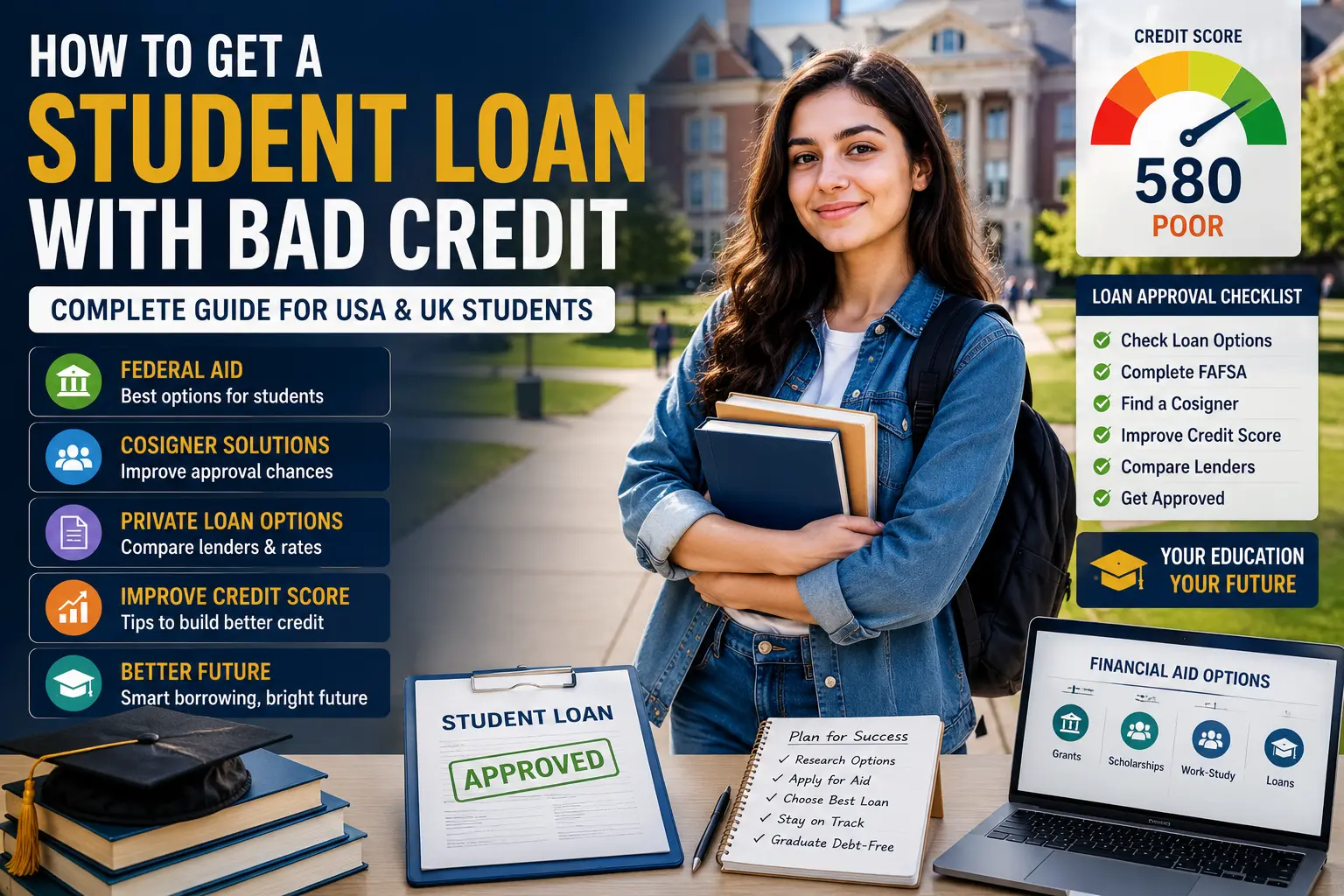
How to Get a Student Loan with Bad Credit is one of the most searched education finance topics among students in the USA and UK. Many students worry that a low credit score will prevent them from attending college, university, or graduate school. Fortunately, there are multiple ways to secure funding even if your credit history is less than perfect.
Understanding How to Get a Student Loan with Bad Credit can help students avoid unnecessary stress and identify financial aid opportunities that are often overlooked. Federal aid programs, grants, scholarships, and certain private lenders can provide funding options for eligible students.
The cost of higher education continues to rise every year. Tuition fees, housing, books, transportation, and living expenses can create a significant financial burden. As a result, many students need financial assistance to pursue their educational goals.
This guide on How to Get a Student Loan with Bad Credit will explain the best loan options, approval strategies, credit requirements, and financial planning techniques that can improve your chances of receiving educational funding.
What Is Considered Bad Credit?
Before discussing How to Get a Student Loan with Bad Credit, it is important to understand what lenders consider a poor credit profile.
A credit score is a numerical representation of your creditworthiness. Lenders use this score to evaluate borrowing risk.
Generally:
- Excellent Credit: 750+
- Good Credit: 700–749
- Fair Credit: 650–699
- Poor Credit: Below 650
Many students have low credit scores simply because they have little or no credit history.
This does not automatically mean they are irresponsible borrowers.

Why Students Often Have Bad Credit
Students frequently struggle with credit-related issues because they are new to financial management.
Common reasons include:
Limited Credit History
Many students have never used loans or credit cards.
Missed Payments
Late payments can negatively affect credit scores.
High Credit Utilization
Using a large percentage of available credit can lower scores.
Collection Accounts
Unpaid bills can damage credit profiles.
When learning How to Get a Student Loan with Bad Credit, understanding these factors can help students improve their financial position.
Can You Get a Student Loan with Bad Credit?
The simple answer is:
Yes.
Many students successfully obtain education funding despite having poor credit or no credit history.
This is one of the most important facts to remember when researching How to Get a Student Loan with Bad Credit.
Several loan programs focus more on educational eligibility than creditworthiness.
These include:
- Federal Student Loans
- FAFSA-Based Aid
- Parent PLUS Loans
- Certain Private Lenders
- Cosigner Student Loans
Federal Student Loans: The Best Option for Students with Bad Credit
When discussing How to Get a Student Loan with Bad Credit, federal student loans are often the strongest option.
Federal loans are funded by the U.S. government and provide several advantages over private loans.
Benefits include:
- Fixed interest rates
- Flexible repayment plans
- Loan forgiveness opportunities
- No credit check for many programs
- Income-driven repayment options
Because of these advantages, students should usually explore federal aid before private financing.
Understanding FAFSA
FAFSA stands for:
Free Application for Federal Student Aid
Completing FAFSA is one of the most important steps in How to Get a Student Loan with Bad Credit.
FAFSA determines eligibility for:
- Federal Student Loans
- Pell Grants
- Work-Study Programs
- State Aid
- Institutional Scholarships
Many students incorrectly assume they will not qualify.
In reality, FAFSA can unlock significant financial assistance.
Direct Subsidized Loans
Direct Subsidized Loans are designed for students with demonstrated financial need.
Benefits include:
- Government-paid interest during qualifying periods
- Lower long-term borrowing costs
- Flexible repayment terms
Students seeking How to Get a Student Loan with Bad Credit should prioritize subsidized loans whenever possible.
Direct Unsubsidized Loans
Direct Unsubsidized Loans are available regardless of financial need.
Key features:
- No credit check for most students
- Available to undergraduate and graduate students
- Flexible repayment options
These loans are commonly used by students with limited credit history.
Why Federal Loans Are Better Than Private Loans for Bad Credit Borrowers
Many students researching How to Get a Student Loan with Bad Credit compare federal and private lending options.
Federal loans often provide:
Easier Approval
Credit scores are usually less important.
Better Borrower Protections
Federal programs offer repayment flexibility.
Loan Forgiveness Opportunities
Certain borrowers may qualify for debt relief programs.
Fixed Rates
Protection from market fluctuations.
These benefits make federal aid the preferred option for many students.
Scholarships and Grants
Another important aspect of How to Get a Student Loan with Bad Credit is reducing borrowing needs altogether.
Scholarships and grants do not typically require repayment.
Examples include:
- Academic Scholarships
- Athletic Scholarships
- Community Scholarships
- Merit-Based Awards
- Need-Based Grants
Students should aggressively pursue scholarship opportunities before taking loans.
Work-Study Programs
Federal work-study programs allow students to earn income while enrolled.
Benefits include:
- Reduced borrowing needs
- Valuable work experience
- Additional financial flexibility
Work-study can play a significant role in college funding strategies.
Common Myths About Bad Credit Student Loans
Myth #1: Bad Credit Means Automatic Rejection
Reality:
Many federal aid programs do not require strong credit.
Myth #2: Private Loans Are Impossible
Reality:
Certain lenders work with students who have limited credit histories.
Myth #3: Scholarships Are Only for Top Students
Reality:
Many scholarships focus on factors beyond academic performance.
Private Student Loans for Students with Bad Credit
When researching How to Get a Student Loan with Bad Credit, many students eventually explore private student loan options.
Private student loans are offered by:
- Banks
- Credit unions
- Online lenders
- Financial institutions
Unlike federal student loans, private lenders usually evaluate:
- Credit score
- Income
- Employment history
- Debt-to-income ratio
This makes approval more challenging for students with bad credit.
However, approval is still possible.
Can You Get a Private Student Loan with Bad Credit?
The answer is yes.
Many lenders understand that students often have:
- Limited credit history
- No full-time income
- Minimal borrowing experience
Because of this, some private lenders offer programs specifically designed for students.
Understanding How to Get a Student Loan with Bad Credit requires learning which lenders are more flexible than traditional banks.
The Importance of a Cosigner
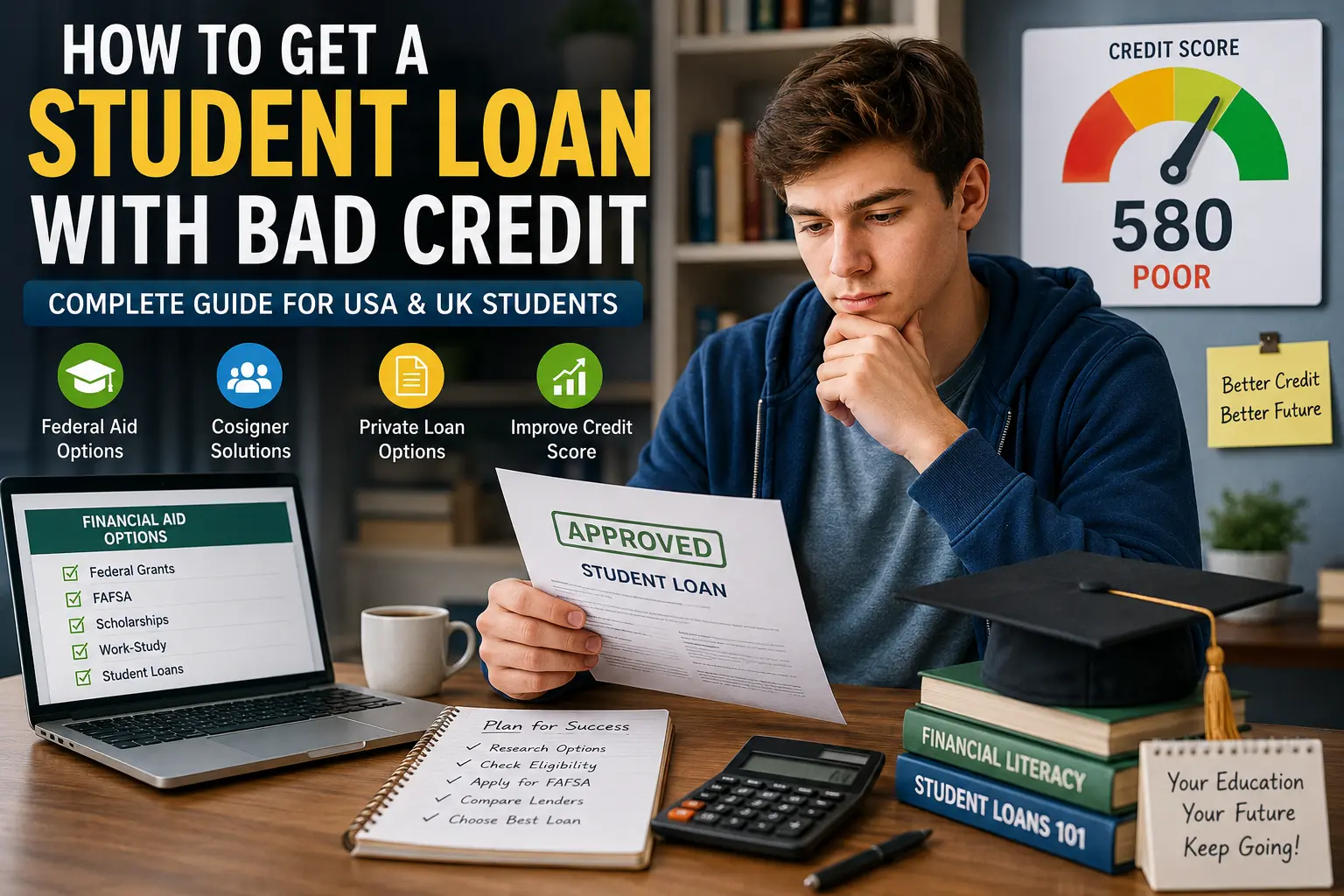
One of the most effective ways to improve approval chances is by using a cosigner.
A cosigner is usually:
- Parent
- Guardian
- Relative
- Trusted family member
The lender considers both applicants during the approval process.
Benefits of Having a Cosigner
Students researching How to Get a Student Loan with Bad Credit often discover that cosigners provide major advantages.
Better Approval Odds
Lenders feel more confident approving the application.
Lower Interest Rates
A strong cosigner can help secure better rates.
Higher Loan Limits
Students may qualify for larger amounts.
Better Loan Terms
Additional flexibility may become available.
What Makes a Good Cosigner?
An ideal cosigner typically has:
- Good credit score
- Stable income
- Low debt-to-income ratio
- Positive payment history
The stronger the cosigner, the stronger the application.
Cosigner Release Programs
Some lenders allow cosigners to be removed later.
Requirements often include:
- On-time payments
- Good borrower history
- Minimum repayment period
Students should compare lenders carefully.
Alternative Ways to Get Approved
Students learning How to Get a Student Loan with Bad Credit should know that a cosigner is not the only solution.
Several strategies may improve approval chances.
Choose a Lower Loan Amount
Borrowing less reduces lender risk.
Smaller requests may receive easier approval.
Demonstrate Academic Success
Some lenders consider:
- GPA
- Academic progress
- Degree program
- Graduation likelihood
Strong academic performance may strengthen applications.
Apply with Multiple Lenders
Every lender uses different approval standards.
Comparing offers may increase approval opportunities.
Understanding Credit Checks
Private lenders typically perform a credit review before approval.
The purpose is to evaluate risk.
Factors reviewed include:
Payment History
Past payments help predict future behavior.
Outstanding Debt
High debt balances may reduce approval chances.
Credit Utilization
Excessive credit card usage may lower scores.
Credit Age
Longer credit history often helps.
Students studying How to Get a Student Loan with Bad Credit should understand these factors before applying.
Improving Your Credit Before Applying
Even small improvements can strengthen applications.
Pay Bills On Time
Payment history is one of the most important credit factors.
Consistent payments can gradually improve scores.
Reduce Credit Card Balances
Lower utilization often helps credit scores.
Aim to use only a small portion of available credit.
Review Credit Reports
Mistakes sometimes appear on credit reports.
Students should review reports regularly.
Avoid New Debt
Multiple new credit applications can hurt scores temporarily.
Focus on financial stability before applying.
Federal PLUS Loans
Another option when researching How to Get a Student Loan with Bad Credit is the Parent PLUS Loan.
These loans are available to parents of dependent students.
Benefits include:
- Higher borrowing limits
- Federal protections
- Fixed interest rates
Parents must generally meet certain credit requirements.
Graduate PLUS Loans
Graduate students may also qualify for Graduate PLUS Loans.
Advantages include:
- Additional funding
- Federal repayment protections
- Fixed rates
These loans can supplement Direct Unsubsidized Loans.
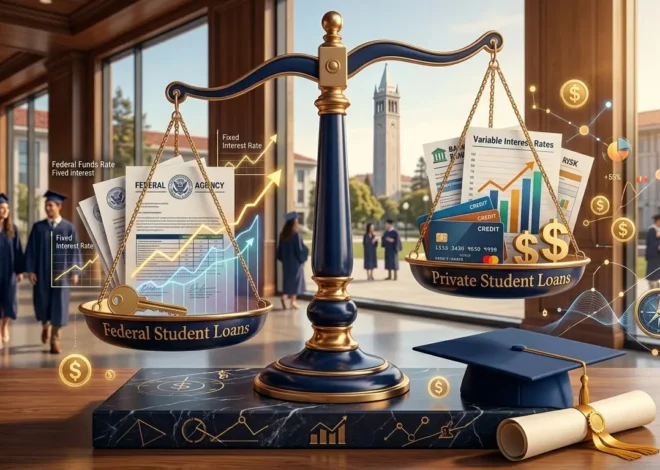
Comparing Federal and Private Loans for Bad Credit Borrowers
Understanding How to Get a Student Loan with Bad Credit often involves comparing these options.
| Feature | Federal Loans | Private Loans |
|---|---|---|
| Credit Check | Usually No | Usually Yes |
| Fixed Rates | Yes | Often |
| Income-Based Repayment | Yes | Rare |
| Loan Forgiveness | Available | Rare |
| Cosigner Needed | No | Often |
| Borrower Protections | Strong | Limited |
For most students, federal aid remains the preferred choice.
Common Reasons Student Loan Applications Are Rejected
Students researching How to Get a Student Loan with Bad Credit should understand rejection risks.
Insufficient Income
Private lenders want repayment confidence.
Poor Credit History
Serious credit problems may affect approval.
High Existing Debt
Heavy debt obligations can reduce eligibility.
Missing Documentation
Incomplete applications often create delays or denials.
Student Loan Approval Tips
These strategies may improve success.
Complete FAFSA First
Always maximize federal aid opportunities before pursuing private loans.
DoFollow External Resource
Federal Student Aid:
Submit FAFSA Early
Early applicants may access more aid opportunities.
DoFollow External Resource
FAFSA Application:
https://studentaid.gov/h/apply-for-aid/fafsa
Compare Multiple Lenders
Never accept the first loan offer.
Compare:
- Interest rates
- Fees
- Repayment terms
- Cosigner policies
Improve Credit Before Applying
Even modest score improvements can make a difference.
Consider Community Colleges
Lower tuition costs may reduce borrowing needs.
How Bad Credit Affects Interest Rates
A major topic in How to Get a Student Loan with Bad Credit is understanding borrowing costs.
Lower credit scores often result in:
- Higher rates
- Higher monthly payments
- Greater total repayment costs
This is why credit improvement matters.
Building Credit While in College
Students can gradually strengthen their financial profiles.
Use a Student Credit Card Responsibly
Small purchases paid on time help establish history.
Become an Authorized User
Parents may add students to existing accounts.
This can strengthen credit history.
Make Payments Consistently
Positive payment records build trust with future lenders.
Internal Links to Add
Throughout this article, add links to:
Best Student Loans for College Students in USA
Federal vs Private Student Loans Explained
FAFSA Complete Guide
Student Loan Repayment Plans Explained
How to Build Credit Score as a Student
These internal links improve SEO and help satisfy Rank Math requirements.
Additional DoFollow External Resources
Consumer Financial Protection Bureau
https://www.consumerfinance.gov
Useful for learning about student loan rights and financial protection.
Student Finance UK
https://www.gov.uk/student-finance
Official information for UK students seeking education funding.
Best Student Loan Lenders for Students with Bad Credit
When researching How to Get a Student Loan with Bad Credit, students often ask which lenders are most likely to approve applications.
The answer depends on:
- Credit history
- Income
- Cosigner availability
- Degree program
- School eligibility
There is no single lender that works for everyone.
Students should compare multiple options before accepting any loan offer.
What to Look for in a Student Loan Lender
Before applying, evaluate:
Interest Rates
Lower rates reduce borrowing costs.
Repayment Flexibility
Flexible plans help during financial hardship.
Cosigner Release
Some lenders allow removal of cosigners after successful payments.
Customer Support
Strong customer service can simplify repayment.
Financial Hardship Programs
Temporary assistance may be available during difficult periods.
Students studying How to Get a Student Loan with Bad Credit should compare these features carefully.
Understanding APR
Many students focus only on interest rates.
However, APR (Annual Percentage Rate) is equally important.
APR includes:
- Interest costs
- Certain fees
- Overall borrowing expenses
Comparing APR provides a more accurate picture of total loan costs.
Student Loan Refinancing Explained
Another important topic within How to Get a Student Loan with Bad Credit is refinancing.
Refinancing means replacing one or more existing loans with a new loan.
Goals may include:
- Lower interest rates
- Reduced monthly payments
- Simplified repayment
Benefits of Refinancing
Refinancing may provide:
Lower Interest Costs
Reduced rates can save money.
Easier Loan Management
One payment instead of multiple payments.
Better Financial Planning
Predictable repayment structures.
Federal vs Private Student Loans Explained: Which Is Better for College Students in 2026?
Risks of Refinancing Federal Loans
Students should understand an important warning.
Refinancing federal loans into private loans may result in losing:
- Income-driven repayment plans
- Federal forgiveness programs
- Government protections
- Deferment benefits
This decision should never be made without careful research.
When Refinancing Makes Sense
Refinancing may be beneficial if:
Credit Score Has Improved
Better scores often qualify for lower rates.
Income Has Increased
Stable income improves approval odds.
Existing Interest Rates Are High
Lower rates may create substantial savings.
Student Loan Repayment Strategies
Anyone learning How to Get a Student Loan with Bad Credit should develop a repayment plan before graduation.
Responsible repayment reduces financial stress.
Strategy 1: Make Interest Payments During School
For unsubsidized loans:
Interest accumulates while enrolled.
Paying interest early prevents balance growth.
Strategy 2: Make Extra Payments
Additional payments reduce:
- Principal balance
- Total interest paid
- Repayment duration
Even small extra payments can help.
Strategy 3: Enroll in Automatic Payments
Many lenders offer discounts for autopay.
Benefits include:
- Lower rates
- Fewer missed payments
Strategy 4: Follow a Budget
Graduates should track:
- Income
- Rent
- Utilities
- Transportation
- Savings
- Debt obligations
Budgeting improves repayment success.
Student Loan Debt Reduction Techniques
Students researching How to Get a Student Loan with Bad Credit should understand debt reduction strategies.
Debt Snowball Method
Focus on the smallest balance first.
Benefits:
- Quick wins
- Increased motivation
Debt Avalanche Method
Focus on highest-interest debt first.
Benefits:
- Lower total interest costs
- Faster financial optimization
Many financial experts prefer this approach.
Building Credit After Receiving a Student Loan
Student loans can help strengthen credit when managed responsibly.
Make Payments On Time
Payment history strongly affects credit scores.
Keep Other Debt Low
Avoid excessive credit card balances.
Monitor Credit Reports
Review reports regularly for accuracy.
Avoid Default
Loan defaults can cause severe credit damage.
Responsible borrowing is essential.
USA vs UK Student Loan Systems
Students often compare education financing options across countries.
Understanding these differences helps international students make informed decisions.
United States Student Loan System
Characteristics include:
- Federal student loans
- Private student loans
- FAFSA-based aid
- Multiple repayment plans
Students often combine several funding sources.
United Kingdom Student Loan System
Characteristics include:
- Government-administered financing
- Income-based repayment thresholds
- Different tuition structures
Repayment obligations vary significantly from the U.S. system.
Which System Is Better?
The answer depends on:
- Residency status
- Educational goals
- Career plans
- Financial circumstances
Both systems offer advantages.
Students should research carefully before borrowing.
High ROI Degree Programs
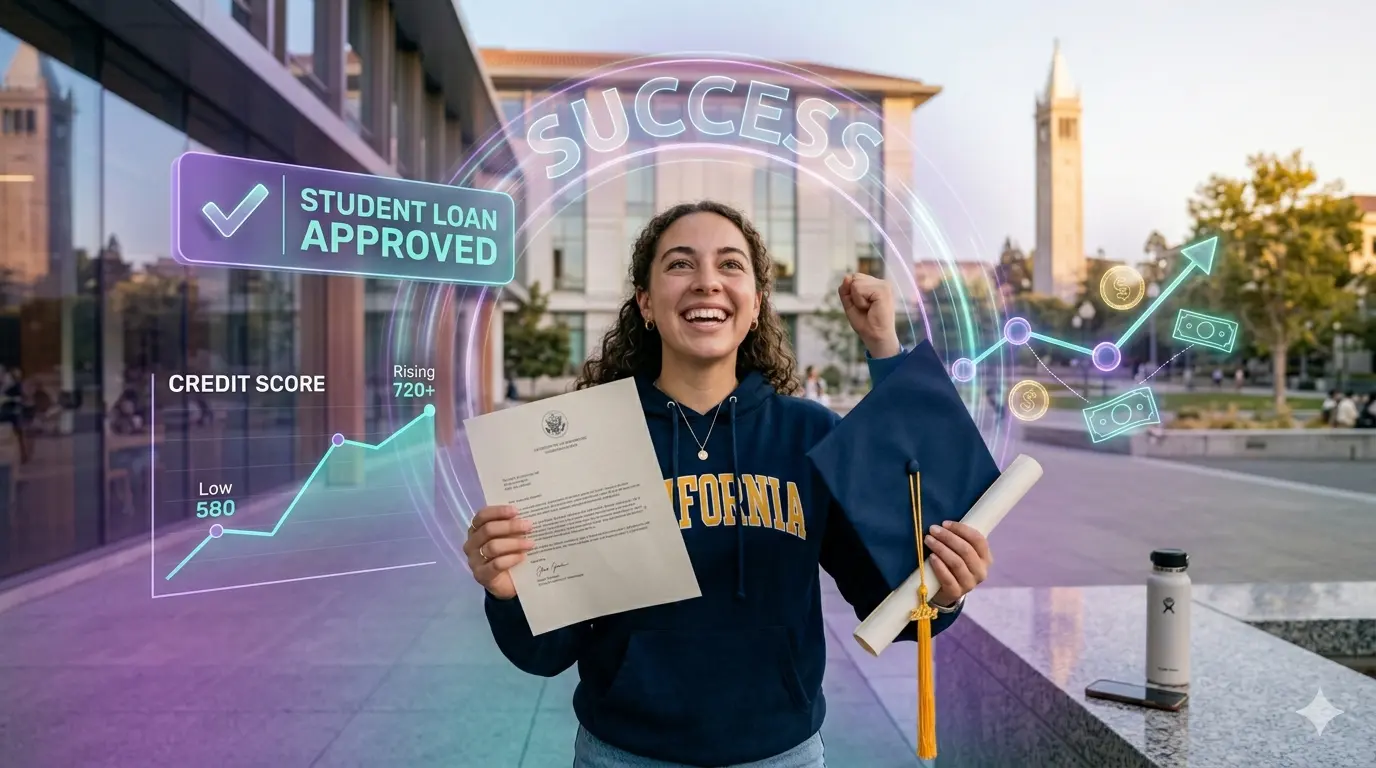
One of the smartest strategies in How to Get a Student Loan with Bad Credit is ensuring the degree provides strong earning potential.
Historically, high-return fields include:
Engineering
Strong salaries and demand.
Computer Science
Growing technology opportunities.
Healthcare
Stable career prospects.
Finance
High earning potential.
Data Analytics
Rapidly expanding industry demand.
A strong return on investment can make loan repayment easier.
Common Mistakes to Avoid
Many students make avoidable borrowing mistakes.
Borrowing More Than Necessary
Only borrow what is required.
Ignoring Interest Costs
Interest can significantly increase total repayment.
Skipping FAFSA
Students may miss valuable aid opportunities.
DoFollow External Resource
Federal Student Aid:
Not Comparing Lenders
Always review multiple offers.
Waiting Until the Last Minute
Early planning often produces better results.
Expert Tips for Students with Bad Credit
Students looking for How to Get a Student Loan with Bad Credit can improve success by following these recommendations.
Complete FAFSA Every Year
Federal aid should always be explored first.
Search for Scholarships Aggressively
Many scholarships remain unclaimed each year.
Improve Credit Before Applying
Small improvements may lead to better approval outcomes.
Consider a Cosigner
Strong cosigners often improve applications.
Borrow Conservatively
Lower debt reduces future financial pressure.
Internal Links to Add
Add links throughout the article to:
Best Student Loans for College Students in USA
Federal vs Private Student Loans Explained
FAFSA Complete Guide
Student Loan Repayment Plans Explained
Personal Finance Tips for College Students
How to Build Credit Score as a Student
These internal links help SEO performance and user engagement.
Additional DoFollow External Resources
FAFSA Application
https://studentaid.gov/h/apply-for-aid/fafsa
Consumer Financial Protection Bureau
https://www.consumerfinance.gov
Student Finance UK
https://www.gov.uk/student-finance
These resources provide official information regarding student loans and financial aid.
Conclusion
Understanding How to Get a Student Loan with Bad Credit starts with recognizing that poor credit does not automatically prevent educational opportunities. Federal student loans, FAFSA assistance, scholarships, grants, and work-study programs can provide significant financial support.
Students should focus first on federal aid opportunities because they offer the most borrower-friendly terms and often do not require strong credit histories.
In Part 2, we will explore private student loans, cosigner requirements, approval strategies, credit score improvement techniques, and lender evaluation methods.
After reviewing How to Get a Student Loan with Bad Credit, one thing becomes clear:
Bad credit does not automatically prevent students from accessing higher education funding.
Many borrowers successfully secure financial aid through:
- Federal Student Loans
- FAFSA Programs
- Scholarships
- Grants
- Work-Study Opportunities
- Private Loans with Cosigners
For most students, federal student loans should be the first option because they offer:
✓ Easier qualification
✓ Fixed interest rates
✓ Flexible repayment plans
✓ Loan forgiveness opportunities
✓ Strong borrower protections
Private loans should generally be considered only after federal aid has been maximized.